
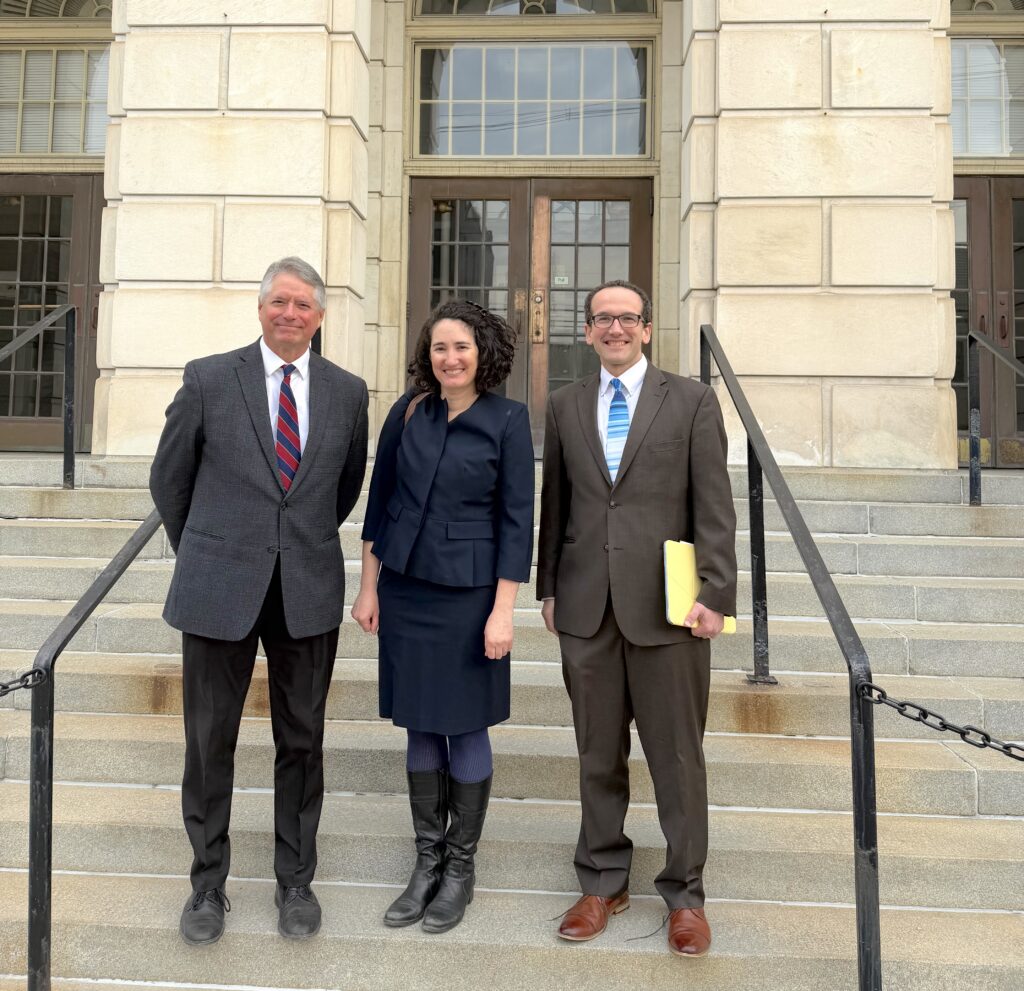
A week ago, I visited the federal courthouse in Rutland, where the office of Vermont’s Attorney General Charity Clark defended our state’s landmark Climate Superfund Act from attacks by the oil industry, Republican attorneys general from other states, and the Trump Administration. Here’s the update…
Climate change is hitting Vermont hard and is costing us billions.
From repeated flooding to damaged roads and washed-out infrastructure, communities across our state are facing growing costs. In the Northeast Kingdom, towns are still struggling to recover from last summer’s storms.
After President Trump denied Vermont’s request for FEMA disaster assistance, state lawmakers had to step in with their own funding plan to help communities rebuild. A separate bill making assistance available for farmers affected by extreme weather was just signed by the governor.
That means Vermont taxpayers are being asked to shoulder costs that are only getting bigger.
That is exactly why Vermont passed the nation’s first Climate Superfund law.
This landmark law is based on a simple value most of us learned in kindergarten: If you make a mess, you should help clean it up. For decades, fossil fuel companies have contributed heavily to the climate crisis while earning enormous profits.
The Climate Superfund requires Big Oil companies to pay a fair share of the costs of climate damage and resilience, instead of leaving Vermonters to foot the entire bill. Without it, all of the costs of rebuilding and preparing for future storms will fall on taxpayers.
Now, that law is under attack.
The Trump administration, along with fossil fuel industry groups and a coalition of Republican state attorneys general, is suing Vermont to block the Climate Superfund from going into effect. Trump’s Department of Justice argues that Vermont does not have the authority to hold these companies accountable, even as climate impacts worsen.
This case could determine whether states like Vermont can take action to protect their residents when the federal government fails to act.
Even while the law is under attack in court, Vermont is continuing to move forward with its implementation.
State Treasurer Mike Pieciak is working to calculate the full costs that climate change has imposed on Vermont. That work is essential to ensuring that fossil fuel companies are held responsible for their share of the damage, and that any payments are grounded in rigorous analysis.
At the federal courthouse in Rutland, attorneys for the state and Vermont farmers argued forcefully that Vermont has the right to protect the health and welfare of its residents and to recover costs from those responsible for climate harm (New York Times, “Vermont Hits Back at Trump’s Effort to Block ‘Climate Superfund’ Law”). The outcome of this case will have national implications.
This is a pivotal moment.
If Vermont succeeds, we will set a powerful precedent that Big Oil can be held accountable.
If Donald Trump, the Republican attorneys general, and the oil industry win, taxpayers will be left to pay the full cost of a crisis they did not create.
We’re grateful for the work of Vermont Attorney General Charity Clark and her team, as well as Conservation Law Foundation and NOFA Vermont, who are intervening in the case. VPIRG filed an amicus brief defending the law with the assistance of Vermont Law and Graduate School’s Environmental Advocacy Clinic. We’ve also had incredible assistance from private legal experts and attorneys with the Natural Resources Defense Council.
Want to learn more? Here are a few helpful articles that explain the Climate Superfund and the legal fight:
Seven Days: Climate Activists Make a Church Street Statement With Big Pig
VTDigger: After historic flooding, many Vermont towns still awash in red ink and repairs
ABC News: Vermont officially becomes 1st state to charge big oil for climate change damage
VTDigger: Trump takes Vermont’s climate superfund law to court
Vermont Public: Legal scholars say lawsuits over Vermont Climate Superfund Act could go to U.S. Supreme Court
The Boston Globe: In Vermont, courts weigh who should pay for the cost of climate change
Brattleboro Reformer: Treasurer Pieciak hires Sue Minter to lead Vermont’s Climate Superfund Project
MyNBC5: Attorneys debate Vermont Climate Superfund Law at Rutland Federal Court